
Stains after washing: why they appear and how to prevent them

You take the laundry out of the machine and find stains that were not there before the wash: white streaks, greasy marks, grey specks or brown spots. It is a very common problem, and it is almost never caused by the garment itself but by the laundry detergent, the fabric softener, the water or the washing machine. In this article you will learn how to identify the cause from what the stain looks like, how to remove it and what to change so it does not happen again.
Quick table: stain, cause and solution
| What it looks like | Most common cause | What to do |
|---|---|---|
| White streaks, powder or flakes on dark clothes | Detergent residue: too high a dose, an overloaded drum, hard water | Rinse again in clean water, reduce the dose |
| Greasy, darker, slippery marks | Fabric softener got directly onto the fabric, or too much was used | Rub in laundry detergent and wash again |
| Grey or brown dirty specks, "slime" | A dirty washing machine: sludge in the seal, the drawer, the drum | Clean the machine, wash the laundry again |
| Orange or brown spots | Rust: metal buttons, zips, pins, coins, a rusting drum or pipes | Citric acid or a rust remover |
| Blue, green or other coloured specks | Undissolved granules of detergent containing dyes, or colour run from other clothes | Wash again, wash separately next time |
| Yellow or brown stains that "weren't there" before | Invisible stains (grease, sweat, sugary drinks) brought out by heat | Enzyme laundry detergent on the stain, soaking |
| Pale rings, water marks | Hard water, limescale | Rinse again, vinegar in the final rinse |
1. White streaks: detergent residue
They are most visible on black and dark clothes. Laundry detergent does not rinse out when too much is used, when the drum is packed to the top or when the water is hard. Powder dissolves even less well, especially at low temperatures.
- How to remove: run a Rinse or Rinse + Spin programme without detergent. If the streaks are still there, wash again with a smaller dose.
- How to prevent: use the amount recommended for the soil level, leave at least a hand's width of space in the drum and switch on an extra rinse in hard water.
More: detergent residue on clothes and dosing laundry detergent.
2. Greasy marks: fabric softener
Fabric softener is concentrated. If it runs onto dry fabric, for example when it is poured straight into the drum, when the softener compartment is filled above the MAX line or when the drawer channels are blocked, darker, greasy-looking marks are left on the garment.
- How to remove: dampen the mark, rub in laundry detergent, leave for 15 minutes and wash again at the usual temperature without fabric softener.
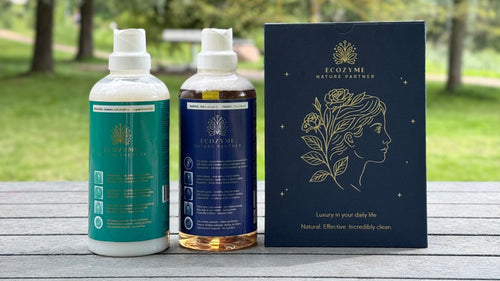
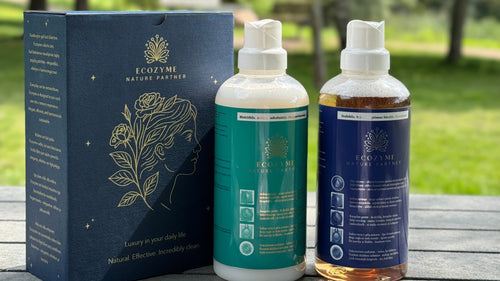
- How to prevent: put fabric softener only in the softener compartment and not above the MAX line, and wash out the drawer once a month. Ecozyme fabric softener needs just 10 ml per kilogram of laundry.
3. Grey and dirty specks: a dirty machine
If grey or brown specks appear on your laundry, sometimes with a slimy residue, and the laundry smells damp, the problem is in the washing machine. Sludge that has built up in the door seal, the drawer and on the outside of the drum breaks off and settles on the fabric.
- How to remove: clean the machine first, and only then wash the laundry again. Otherwise the stains will reappear.
- How to prevent: leave the door ajar after washing and run a 60 °C programme once a month.
How to clean it: cleaning your washing machine and washing machine smells.
4. Orange and brown spots: rust
Rust stains usually come from metal buttons, zips, hooks, pins or coins left in pockets. Less often they are caused by rusting pipes or an old water heater: then the stains keep appearing on all kinds of laundry.
- How to remove from white cotton: sprinkle on citric acid or squeeze on lemon juice, dampen and leave for 30–60 minutes, then rinse and wash. On coloured fabrics, test on a hidden area first or choose a rust remover made for fabrics.
- What not to do: do not use chlorine bleach. It makes a rust stain darker.
- How to prevent: empty pockets, do up zips and wash clothes with metal details inside out.
5. Coloured specks
Blue or green specks come from undissolved granules of washing powder containing dyes. Stains of other colours are usually colour run from a new garment or one with unstable dyes.
- How to remove: granule specks usually just need another wash. Rewash colour run as soon as possible, before the garment dries.
- How to prevent: wash new bright clothes separately for the first few washes. Liquid laundry detergent without dyes does not leave such specks. More: powder or liquid laundry detergent.
6. Stains that "appeared" after drying
Grease, sweat, sugary drinks or cream on a garment may be almost invisible at first. If the wash did not get them out, the heat of a tumble dryer or radiator oxidises them, and after a few days or weeks they turn yellow or brown. That is why it looks as though the stain appeared after washing, when in fact it was there all along.
- How to remove: dampen the stain, pour enzyme laundry detergent directly onto it and leave for 15–30 minutes; in stubborn cases, soak for a few hours. Then wash at 30–40 °C. Ecozyme enzyme laundry detergent is designed for exactly this kind of set-in stain; just do not use it on wool and silk.
- How to prevent: before drying on a high heat, check that the stain has really gone. Pre-treat greasy and sweaty areas with laundry detergent before washing.
More: how to remove set-in stains and sweat stains on white shirts.
7. Water marks and limescale
Pale rings or marks, especially on dark synthetics, appear when the limescale in hard water settles on the fabric as it dries. Rinse the laundry again, add 100–125 ml of 9% vinegar to the fabric softener compartment and descale your washing machine regularly. How to use vinegar: vinegar in the washing machine.
Checklist for no more stains after washing
- Dose laundry detergent according to the soil level and water hardness, not by eye.
- Do not overload the drum: leave at least a hand's width of space at the top.
- Put fabric softener only in its own compartment and not above the MAX line.
- Empty pockets and do up zips.
- Once a month, clean the drawer and the seal and run a 60 °C programme.
- Check for stains before drying. Heat sets them.
Frequently asked questions
Why are there stains on my clothes after washing?
Usually because of detergent or fabric softener residue, a dirty washing machine, rust, or invisible grease and sweat stains that heat has brought out. The colour of the stain usually tells you the cause.
How do I remove greasy marks after washing?
These are usually fabric softener marks. Dampen them, rub in laundry detergent, leave for 15 minutes and wash again without fabric softener.
Why are there white streaks on black clothes after washing?
That is detergent residue. Rinse the clothes again in clean water, use less detergent next time and do not overload the drum.
Where do brown stains after washing come from?
Brown or orange spots are usually rust from metal details or items left in pockets. Greyish-brown dirty specks point to a dirty washing machine.
How do I remove stains after washing and drying?
Pour enzyme laundry detergent directly onto the stain, leave for 15–30 minutes, in stubborn cases soak for a few hours, and wash again. Do not dry on a high heat until the stain has gone.
Summary
Stains after washing almost always have a clear cause: too much detergent or fabric softener, a dirty machine, rust, hard water or invisible stains that were there before. Identify the stain by its appearance, remove it the right way and change one or two habits. Then your laundry will come out of the machine just the way you expect.