
Laundry Detergent for Colours: How to Protect Colours and Wash Out Stains

Coloured clothes often lose their good looks not because they are poor quality, but because they are washed too harshly. Too high a temperature, too much detergent, poor sorting and drying for too long in direct sunlight can quickly fade fabric.
If you want your favourite jumpers, T-shirts, dresses or jeans to stay bright for longer, it is important to choose the right laundry detergent for coloured clothes and follow a few simple rules. This guide covers sorting, temperatures, dosing, stain treatment and the most common mistakes.
Why do coloured clothes fade?
Fading is not caused by frequent washing alone. Colours weaken faster when fabric constantly rubs against other items in a full drum, is washed too hot or gets too much detergent. Some fabrics are also harmed by drying for a long time in direct sunlight, especially if the colour is intense.
It helps to tell two different problems apart:
- Fading – the colour gradually becomes duller because of friction, heat and light.
- Colour run – dye transfers from one garment to another, for example a white T-shirt turns pink because of a new red jumper.
When caring for coloured clothes, what matters most is not the strongest programme but a gentle yet effective wash.
Which detergent is right for coloured clothes?
For coloured clothes a liquid detergent is usually the practical choice: it disperses quickly in water and does not leave white, undissolved particles on the fabric. This is especially important for darker, bright and mixed fabrics.
A good laundry detergent for coloured clothes should remove everyday dirt, sweat odour and light stains without wearing the fabric out unnecessarily. That is why it is worth washing according to the care label, not overdosing and avoiding high temperatures when they are not needed. Coloured clothes do not need bleach – it is meant for white fabrics and can leave pale patches.
An enzyme detergent has a clear advantage here: enzymes already work in cool water, so stains can be removed without raising the temperature, which is what harms colours.
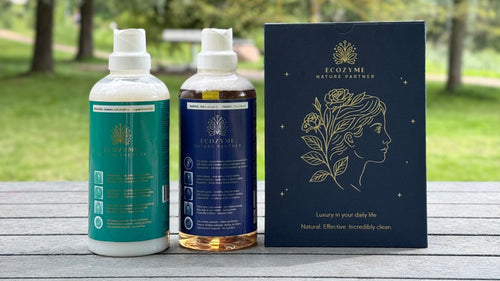
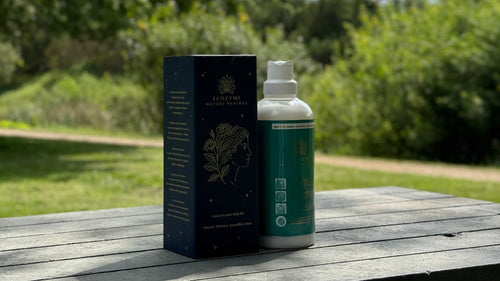
Ecozyme tip: if you are looking for an all-round choice for coloured and everyday clothes, choose Ecozyme laundry detergent. It is suitable for everyday use, works from 30 °C and is easy to dose for different load sizes. It is not suitable for wool and silk – for those, choose a product made specifically for these fabrics.
How to wash coloured clothes
1. Sort colours in a practical way
You do not need ten different laundry piles, but it is worth separating colours into at least three groups: whites, light colours, and darks or brights. New, intensely coloured clothes can bleed more in the first few washes, so wash them with extra care.
2. Check whether a new garment bleeds
Dampen a white cotton cloth or cotton pad and press it for a few seconds against a hidden part of the garment, such as an inside seam. If colour transfers to the cloth, wash the garment on its own or only with similar colours for the first 2–3 washes.
3. Turn clothes inside out
Before washing, turn jumpers, T-shirts, trousers and printed clothes inside out. This reduces friction on the outer side, so the colour and prints stay neat for longer. Close zips – they can snag and rub other fabrics.
4. Choose a lower temperature
For most coloured clothes 30–40 °C is enough unless they are very dirty. A lower temperature helps protect the colour and fabric structure and puts less unnecessary strain on textiles. Always check the care label, as some fabrics have specific care restrictions. Read more in our article on washing at low temperatures.
5. Pre-treat stains before washing
If a coloured garment has a stain, it is better to apply a small amount of liquid detergent directly to it and leave it for 10–15 minutes than to choose a hot programme for the whole garment. This way the stain gets more attention and the rest of the fabric is spared. Test the product on a hidden spot first and do not rub the fabric hard – dab it gently instead.
6. Do not overload the drum
Coloured clothes rub against each other more in a full drum. This can cause pilling, fading and poorer rinsing. Leave room for the laundry to move, especially when washing jumpers or thicker fabrics. A good rule of thumb is a gap about the width of your hand between the laundry and the top of the drum.
7. Dose accurately
Extra detergent does not clean better, and on dark fabrics it can leave pale streaks. 1 l of Ecozyme laundry detergent is enough for up to 33 washes. For lightly soiled laundry use 40 ml, or 30 ml in soft water.
Temperatures and programmes by type of garment
| Clothes | Temperature | Programme and tips |
|---|---|---|
| Coloured cotton T-shirts, jumpers | 30–40 °C | Colours programme, inside out |
| Jeans | 30 °C | Inside out, buttoned up, with similar colours |
| Bright and new clothes | 30–40 °C | Separately for the first few washes |
| Synthetics, viscose | 30 °C | Gentle programme, lower spin speed |
| Printed clothes | 30 °C | Inside out, no tumble dryer |
How to dry clothes so the colours do not fade
- Dry in the shade or indoors, especially bright and dark clothes.
- Dry them inside out – even if the sun reaches them, the outer side stays protected.
- Do not leave clothes on the drying rack longer than needed to dry.
- If you use a tumble dryer, choose a lower heat setting.
Do coloured clothes need a separate detergent?
If you wash very delicate, luxury or special-care fabrics, you may need a specialist product. For most everyday coloured clothes, however, a good all-purpose liquid detergent is enough, as long as it is used correctly. The key is not to overdo the dose or the temperature.
What to avoid
- Do not wash coloured clothes together with whites.
- Do not use more detergent just because the clothes are bright.
- Do not use bleach or chlorine-based stain removers on coloured fabrics.
- Do not dry intense colours in direct sunlight for long periods.
- Do not use a high temperature if a lower one will do.
- Do not leave wet coloured clothes in the washing machine for too long – in a damp pile, dye can transfer from one fabric to another.
If your clothes have already lost their brightness, you will find practical tips in our article How to Revive the Colours in Old Clothes.
Frequently asked questions
At what temperature should coloured clothes be washed?
For most everyday coloured clothes 30–40 °C is enough. Bright and new clothes can be washed at as little as 30–40 °C if you use a detergent that works in cool water.
What should I do if a garment has dyed other laundry?
Do not dry the affected clothes. Rewash them separately as soon as possible in cool water, without the garment that bled. The sooner you do it, the better the chance of washing the colour out.
Can coloured and dark clothes be washed together?
Dark and bright clothes can be washed together if they have already been washed several times and no longer bleed. Light colours are better washed separately from darks.
Does liquid detergent protect colours better than powder?
Liquid detergent disperses quickly in water and leaves no undissolved particles, so it is often more convenient for coloured and dark clothes. The right dose and temperature still matter most.
Summary
A laundry detergent for coloured clothes should wash out everyday dirt while letting you wash more gently. The biggest difference comes not only from the product you choose, but from the whole routine: sorting, a lower temperature, the right dose and pre-treating stains before washing.
For everyday washing of coloured clothes, take a look at Ecozyme laundry detergent for clothes.