
Laundry Detergent for Towels and Bed Linen: How to Get Rid of Bad Smells

Towels and bed linen should smell clean. Yet sometimes they are washed, dried and put away in the cupboard, and a few days later the damp, musty or stale smell is back. In that case the problem is often not just the washing machine. It matters a great deal which laundry detergent for towels and bed linen you use, how much of it you add and how the textiles are dried.
Towels and bedding absorb a lot of moisture, body oils, sweat and product residue, so they need slightly different care from ordinary T-shirts. Below you will find why the smell appears, which temperature to choose, how to “reset” towels that already smell and what to change in your everyday routine.
Why do towels start to smell bad?
The smell usually does not appear after one bad wash but builds up gradually. Body oils, soap residue, too much detergent and a layer of fabric softener accumulate in the fabric. If a towel stays damp for a long time after use, the smell sets in even faster.
A typical sign: the towel smells fine when dry, but as soon as it gets damp after a shower it gives off a sour or musty odour. This means that soil and residue have stayed in the fibres and “come back to life” when wet.
Typical causes:
- towels go into the laundry basket while still wet;
- too much detergent or fabric softener is used;
- the machine is overloaded and the textiles are not rinsed properly;
- only very short programmes are used;
- bed linen or towels are put away before they are completely dry.
Which detergent is right for towels and bed linen?
For towels and bedding, it is important that the detergent removes sweat, body oils and everyday moisture residue thoroughly. A strong fragrance alone does not solve the problem, because it only masks the cause. The fabric needs to be properly washed, not just scented.
Liquid detergent is a convenient choice because it disperses quickly in water, is easy to dose and suits a range of cycles. Enzyme detergents also help break down protein and fatty soiling, which is what most often causes the musty smell. If textiles have a long-standing odour, pay extra attention not only to the product but also to drying.
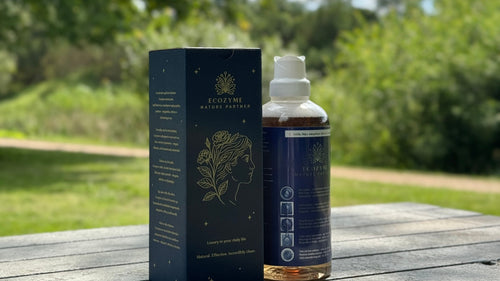
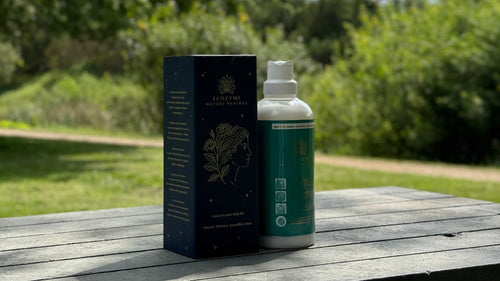
Ecozyme tip: for everyday towels, bed linen and clothes, choose Ecozyme laundry detergent. It is a versatile choice for the home when you want one product for different textiles. It works from 30 °C, and 1 l is enough for up to 33 washes.
What temperature and how often
Always check the care label first. If it allows, use these guidelines:
| Textile | Temperature | How often to wash |
|---|---|---|
| Cotton bath towels | 40–60 °C | Every 3–4 uses |
| Kitchen towels and tea towels | 60 °C | Every 1–3 days |
| Cotton or linen bedding | 40–60 °C | Every 1–2 weeks |
| Pillowcases | 40–60 °C | Every week |
| Microfibre and synthetic textiles | 30–40 °C | Depending on use |
You can find more about caring for bedding in the article Washing bedding: what temperature and how often.
How to wash towels so no smell is left
1. Do not put wet towels in a closed basket
If a towel goes straight from the shower into the laundry basket and stays there crumpled up, a smell develops very quickly. Let it dry before washing or wash it as soon as possible.
2. Do not use too much fabric softener
Fabric softener can give a pleasant feel, but too much of it does towels no good. It can reduce absorbency and leave a coating that traps odours. If your towels smell unpleasant, skip the softener for a few washes.
3. Dose the detergent according to the load
Towels soak up a lot of water, so the machine should not be loaded to the maximum. An overloaded drum and too much detergent are a bad combination: the product stays in the fabric, and after a few uses the towel starts to smell again. In practice, fill about two thirds of the drum with towels.
4. Wash towels separately from clothes
It is better to wash towels on their own: they often tolerate a higher temperature, and zips and buttons can pull the loops. An extra rinse helps flush detergent residue out of thick terry cloth.
5. Dry them completely
Towels and bed linen must be completely dry before they go into the cupboard. Even a little moisture in folded fabric can create an unpleasant smell. If you dry indoors, make sure the room is well ventilated.
How to refresh towels that already smell
If the smell returns every time the towels get damp, one normal wash will not be enough. Run a “reset” cycle:
- Fill only half the drum with towels.
- Choose the highest temperature allowed on the label, usually 60 °C, and a full programme rather than a quick wash.
- Add your normal dose of detergent and leave out the fabric softener.
- Switch on the extra rinse.
- If you like, add about 100 ml of white vinegar to the softener compartment during a separate rinse cycle. Do not mix it with products that contain bleach.
- Take the towels out of the machine immediately and dry them in a well-ventilated place.
If the smell has faded after the first cycle but not disappeared, repeat it. If you see small dark spots on the fabric, it may already be mould, which needs separate treatment.
How to wash bed linen
Bedding collects sweat, body oils, cream residue and dust, so it is worth washing it regularly. Choose the temperature according to the label and dose the detergent accurately. If your bed linen smells unpleasant, do not simply use more of a heavily scented product – instead choose a fuller programme, more room in the drum and good drying.
- Turn duvet covers inside out and close buttons or zips so that other laundry does not get trapped inside.
- A double bed set is often best washed on its own, without other laundry.
- Take the bedding out straight after washing and shake it out – it will dry faster and more evenly.
- Store it in a dry, ventilated cupboard rather than in an airtight bag.
When could the washing machine be the problem?
If the smell comes not only from towels but from all your laundry, it is worth cleaning the washing machine. Check the rubber seal around the door, the detergent drawer and the filter. Detergent and softener residue can build up inside the machine itself and transfer to your textiles. You will find detailed steps in our washing machine cleaning guide. After every wash, leave the door and drawer slightly open so the machine can dry out.
Common mistakes
- The smell is masked with more fabric softener or a scented product.
- Towels are only washed at 30–40 °C on a quick programme.
- Washed laundry is left in the drum for several hours.
- Bed linen is folded while still cool and slightly damp.
Frequently asked questions
Why do towels only smell when they are damp?
It is a sign that oils, product residue or soil have stayed in the fibres. While the fabric is dry, the smell is barely noticeable, but moisture brings it back. A “reset” cycle and a smaller dose in future will help.
Can towels be washed with fabric softener?
Yes, but in moderation and not every time. Too much softener reduces absorbency and can trap odours.
Does bed linen have to be washed at 60 °C?
Not every time. For regular washing 40 °C is often enough; choose 60 °C occasionally or when the bedding has a smell, provided the label allows it.
Does vinegar remove the smell?
Vinegar in the rinse can help remove product residue, but it does not replace a good wash and proper drying. Use it occasionally, not every time.
Summary
A good laundry detergent for towels and bed linen should help remove sweat, moisture and body oil residue, but the product alone is not enough. What matters most is the right dose, a machine that is not overloaded, a suitable temperature, less fabric softener and drying everything completely.
If you want a versatile solution for household textiles, take a look at Ecozyme laundry detergent.