
Laundry Detergent for Second-Hand Clothes: How to Remove Musty Storage Smells and Refresh Fabrics

Second-hand clothes can be a great buy, but they very often carry a distinctive smell of storage, damp, perfume or fabric that has been kept for a long time. A quick wash doesn't always help, as the smell may have soaked into the fibres. In that case, what matters is not only a good detergent, but also proper preparation before the first wear. This guide walks you through the whole process, from airing to drying, and explains what to do if the smell doesn't come out the first time.
Why do second-hand clothes sometimes smell even after washing?
The smell may come from long-term storage, damp, smoke, residue from old washing products or fabric treatments. If the smell is deeply ingrained, a short programme and a small dose often won't remove it. But there's no need to overdose either — it's more important to choose the right cycle and give the product time to work.
| Smell | Most common cause | What helps |
|---|---|---|
| Musty, "storage" smell | Long storage in bags or boxes without air | Airing, soaking, a full wash programme |
| Damp, cellar smell | Humid storage, early mould | Careful inspection, soaking, drying completely |
| Smoke | Tobacco or wood smoke | Long airing, soaking with bicarbonate of soda, sometimes 2–3 washes |
| Someone else's perfume or detergent | Fragrance residue in the fibres | Soaking, an extra rinse, no fabric softener |
| Sweat | Wear by the previous owner | Pre-treating underarms and collar |
If you suspect mould or damp marks, read our separate guide on mould stains on clothes.
Before washing: air and inspect
If a garment has spent a long time in a bag or box, hang it outdoors or by an open window for 1–2 days before washing. Fresh air removes part of the musty smell and helps you judge how strong the odour really is.
While you're at it, check the seams, underarms, collar and lining — this is where stains, mould spots and sweat marks usually hide. Empty the pockets, close the zips and turn the garment inside out: the fabric rubs less and rinses more thoroughly.
The first wash, step by step
- Check the care label and fabric composition. It determines the temperature, the programme and whether the item can be soaked.
- If there are stains, treat them before washing: apply a little liquid detergent, work it in gently and leave for 10–15 minutes.
- If the smell is strong, soak the item as far as the fabric allows (more on this below).
- Wash separately from other clothes so the smell and any loose dye don't transfer.
- Choose a full programme rather than a quick one and, if your machine offers it, an extra rinse.
- After washing, dry completely, ideally in a well-ventilated place or outdoors.
If you're unsure about the care label symbols, use our guide to laundry symbols.
How to soak second-hand clothes
Soaking gives the detergent time where a single cycle can't do enough. Fill a basin or bath with lukewarm water at around 30 °C, dissolve a small amount of liquid detergent and submerge the garment. Cotton and linen usually need 1–2 hours; for a very strong smell, leave them for several hours. Soak synthetics and coloured items for a shorter time, about 30–60 minutes, and watch whether the water takes on any dye.
For musty and smoky smells, 2–3 tablespoons of bicarbonate of soda per 5 litres of water often helps. Never mix chlorine bleach with other products.
Temperature by fabric
| Fabric | Temperature | Note |
|---|---|---|
| Cotton, linen | 40–60 °C | As per the label; a longer programme for strong smells |
| Synthetics, blends | 30–40 °C | Water that is too hot can damage the fibres |
| Viscose, delicates | 30 °C or by hand | Gentle programme, low spin |
| Wool, silk | As per the label | Use only a product made for wool or silk |
Which laundry detergent should you choose?
For second-hand clothes, a liquid laundry detergent is convenient because it's easy to dose and, if needed, can be applied directly to a specific area before washing. For odours and organic residue, it's important that the product doesn't just smell nice but actually helps remove the dirt.
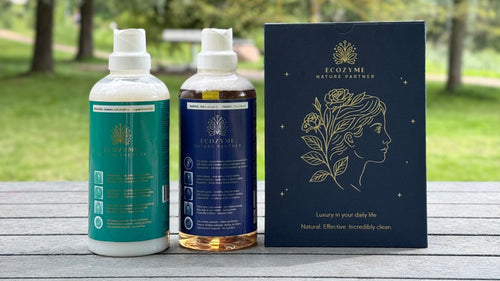
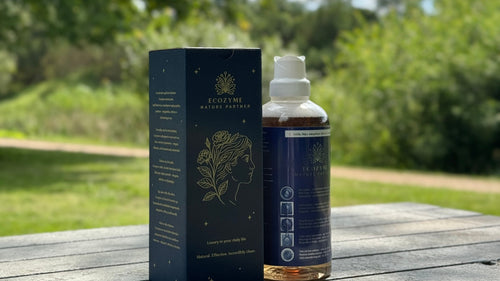
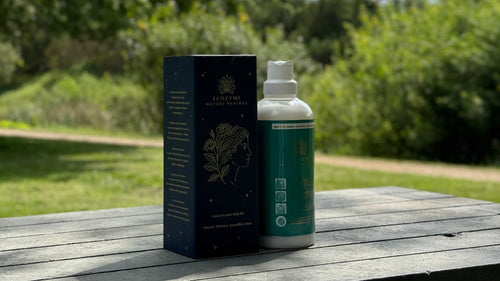
An enzyme detergent such as Ecozyme enzyme detergent helps break down organic soiling, which is often the real source of the smell. It works from 30 °C and suits most fabrics except wool and silk. It has a light fruity-floral scent, but it's the removed dirt, not the scent, that gets rid of an old smell. If you can smell both the fragrance and the old odour after washing, the garment needs a longer soak or another wash.
Dose according to the load size and how dirty it is, rather than adding extra "just in case". Too much detergent rinses out poorly and can leave a smell of its own. Our guide to dosing laundry detergent explains how to get the amount right.
If the fabric is delicate, don't rush to a hot wash. Sometimes a longer but gentler cycle works better, and very delicate fabrics are best washed by hand.
If the smell is still there after the first wash
A deeply ingrained smell often needs more than one cycle — that's normal. Let the garment dry completely before you judge it: damp fabric smells stronger than dry fabric.
- Repeat the soak and wash, soaking for longer this time.
- Add bicarbonate of soda to the soaking water, or pour about 100 ml of white vinegar into the softener compartment for the rinse.
- Dry outdoors — moving air helps clear any lingering smell. Dry dark items in the shade.
- If a damp or mouldy smell remains after 2–3 attempts, the fabric may be affected by mould and needs separate treatment.
What to do with clothes that can't be washed
For coats, jackets and other items whose label doesn't allow machine washing, long airing outdoors, steaming and, if necessary, dry cleaning will help. Wool jumpers can be hand-washed with a wool detergent if the label allows — see our guide to hand washing.
A few days in a closed bag with an open container of bicarbonate of soda also reduces a musty smell in such items. The soda shouldn't touch the fabric.
How to revive colours and the feel of the fabric
Second-hand clothes sometimes look tired not because they're dirty, but because of fabric wear, poor drying or product residue. You can read more about this in the article How to revive colours in old clothes.
It's important not to overdo the fabric softener: it may temporarily improve the feel, but it can also leave extra residue. First, wash normally, rinse well, and only then assess the condition of the fabric.
Common mistakes
- Masking the smell. A strong fragrance or perfume only covers the old odour, and it soon comes back.
- Too much detergent. Residue stays in the fibres and holds on to smells.
- A quick programme. A 15–30 minute cycle rarely removes an ingrained smell.
- Tumble drying too early. Make sure the smell has gone before using heat.
- Putting away items that aren't fully dry. Leftover moisture quickly brings back the musty smell.
- Storing in plastic bags. Fabrics need air — choose a cloth bag or an open shelf.
Frequently asked questions
How many washes does it take to get the smell out of second-hand clothes?
One thorough wash after soaking is usually enough. Smoke, damp or strong perfume smells sometimes need 2–3 cycles. Only judge the garment once it's completely dry.
Does vinegar help remove a musty storage smell?
Vinegar in the rinse can help flush out residue and reduce the smell. About 100 ml of white vinegar in the softener compartment is enough. Don't mix it with chlorine bleach, and don't use it in every wash.
Should I use fabric softener for the first wash?
Better not. Softener can cover up the smell, making it hard to tell whether it's really gone. Once the smell has disappeared, you can use softener as usual, in moderation.
Does freezing get rid of the smell?
Cold may weaken the smell temporarily, but it doesn't remove the cause — dirt and residue in the fibres. Airing, soaking and washing are far more reliable.
Why should second-hand clothes be washed separately?
So that the smell, dye or other residue doesn't transfer to the rest of your laundry. Once the smell has gone, you can wash the item with clothes of a similar colour and fabric.
Summary
The smell in second-hand clothes usually comes from long storage, damp, smoke or someone else's laundry products. The most effective sequence is: air, inspect, soak, wash on a full programme with the right dose and dry thoroughly. Second-hand clothes usually don't need a stronger scent — they need patient preparation and the right laundry detergent.