
How to remove fruit, berry and vegetable stains from clothes

Berry, fruit and vegetable stains are vivid and soak in quickly, but while they are fresh they are not hard to wash out. The key is to act fast and to avoid hot drying until the stain has gone. In this article you will find a general plan and specific tips for berries, tomatoes, carrots, beetroot and bananas.
A quick plan for any fruit or vegetable stain
- Lift off any residue with a spoon or the back of a knife. Do not rub, or the stain will spread.
- Rinse with cold water from the reverse side, so the water pushes the stain out rather than deeper in.
- Pour liquid detergent directly onto the stain and leave for 15–30 minutes.
- Wash at the highest temperature the garment's care label allows.
- Check before drying. If the stain is still visible, repeat and do not put the garment in the tumble dryer, because heat sets the stain.
Why these stains are so vivid
Fruit and vegetables contain natural dyes. In berries and beetroot these are water-soluble pigments, which cold water rinses out fairly easily while the stain is fresh. In tomatoes and carrots the pigments are fat-soluble, so water alone is not enough and you need detergent. Many fruits also contain tannins, which darken over time. That is why an apple or banana stain looks more noticeable after a few days than it did on the first day.
Berry stains: blueberries, cherries, strawberries, raspberries
A fresh stain on sturdy cotton or linen can be flushed with hot water: stretch the fabric over a bowl and pour the water through the stain from a height of about 30 cm. Do not use this method on coloured, synthetic or delicate fabrics; for those, rinse with cold water and use detergent.
If the stain remains, dampen it with a solution of white vinegar and water (1:2) for 10 minutes, rinse, pour on detergent and wash. Do not rub bar soap onto berry stains, as it can set the stain.
Tomato and sauce stains
Tomato pigment is fat-soluble, and sauces contain oil as well. Lift off the residue, rinse with cold water from the reverse side, pour on detergent and leave for 15–30 minutes. Any orange shadow left after washing is often faded by the sun: hang the damp garment in direct sunlight for a few hours. More on greasy stains: oil and grease stains.
Carrot, pumpkin and turmeric stains
Carrot and pumpkin purée stains behave like tomato stains: they need detergent, and the sun helps to fade any yellowish tinge that remains. Turmeric stains are more stubborn. Rinse them with cold water straight away, pour on detergent, wash and dry in the sun. Sometimes it takes two or three attempts.
Beetroot stains
Beetroot pigment is water-soluble, so rinse a fresh stain with cold water from the reverse side for a long time, until the water runs almost clear. Then pour on detergent, leave for 15–30 minutes and wash. If the stain has dried, soak it in cold water for 30 minutes first.
Banana, apple and pear stains
These stains are almost invisible at first and turn brown after a few days. That is why even a faint stain is worth treating straight away: lift off the residue, rinse with cold water, pour on detergent and leave for 15–30 minutes. On white or colourfast fabrics, stains that have already turned brown can be removed with the help of an oxygen bleach, used according to its instructions.
Set-in stains
- Soak the garment in cold water with a little detergent for 1–2 hours.
- Pour detergent directly onto the stain, leave for 15–30 minutes and wash.
- For white and colourfast fabrics, use an oxygen bleach according to the instructions.
- If it does not work, repeat, but do not tumble dry while the stain is still visible.
A general guide to old stains: how to remove set-in stains.
What not to do
- Do not rub the stain with a dry tissue, as you will only work it deeper in.
- Do not iron or dry with heat until the stain has gone.
- Do not use chlorine bleach on coloured fabrics.
- Do not mix different cleaning products together.
Which detergent to use
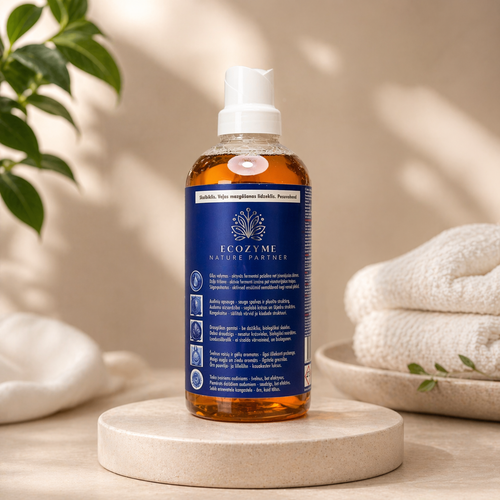
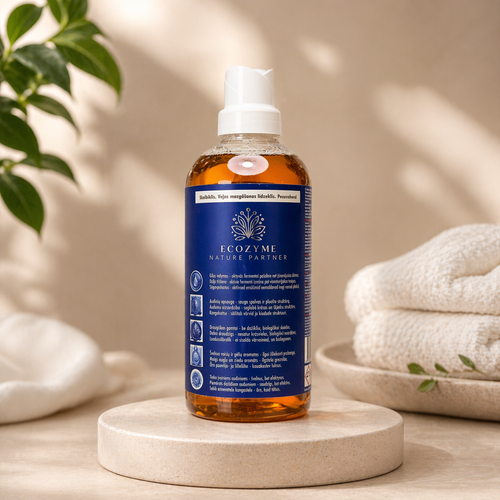
Besides pigments, fruit and vegetable stains contain sugar, starch and fats, so a liquid detergent with enzymes, poured directly onto the stain, helps. Ecozyme enzyme laundry detergent is effective at 30–60 °C, and on set-in stains it should be left for 15–30 minutes before washing. It is not suitable for wool and silk.
Frequently asked questions
How do you get berry stains out of clothes?
Rinse a fresh stain with cold water from the reverse side, pour on detergent, leave for 15–30 minutes and wash. Sturdy white cotton can be flushed with hot water.
Do vegetable stains wash out after drying?
It is harder, but often yes. Soak the garment in cold water, pour detergent onto the stain and wash again. The sun helps to fade carrot and tomato residue.
Does lemon juice help?
On white fabrics, lemon juice and sunlight can lighten a stain, but they can fade coloured fabrics, so do not use this method on those.
Summary
With fruit and vegetable stains, speed matters most: cold water from the reverse side, detergent on the stain for 15–30 minutes, then a wash. Do not dry the garment with heat while the stain is still visible. Guides to other stains: red wine stains and grass stains.