
Laundry Detergent for Black Clothes: How to Prevent Fading, Greying and White Streaks

A laundry detergent for black clothes has to solve a different problem from a detergent for whites. The goal is not to “brighten” anything, but to wash out sweat, body oils, dust and deodorant residue in a way that keeps black looking deep for as long as possible. If your favourite black T-shirts turn grey after a few washes, the fabric is often not the only culprit — the temperature, too much detergent or the wrong cycle can all play a part. Below you will find the whole routine, from choosing a detergent to drying and reviving faded black.
Why do black clothes lose their colour?
Black fades because of friction, hot water, harsh products and overly long washes. Every cycle wears the fibres a little, so it pays to wash dark clothes only when they need it and to choose a gentler programme.
- Friction. Clothes rub against the drum and against each other. Tiny fibre ends and fuzz appear on the surface and scatter light, so the fabric looks greyish even when the dye is still there.
- Hot water. Higher temperatures loosen dye faster, especially in cotton and viscose.
- Bleaching agents. Detergents for whites and oxygen or chlorine bleach are not suitable for black.
- Residue. Detergent that has not been rinsed out and limescale form a greyish film that shows up most on black fabric.
- Sunlight. Drying in direct sun fades dark fabrics.
If your problem is not the colour but white marks under the arms or on the fabric, read our separate guide on white deodorant marks on black clothes.
Faded or just grey? How to tell the difference
Not every grey tinge means the dye has washed out. First, work out what has actually happened.
| Sign | Likely cause | What to do |
|---|---|---|
| Greyish film, fabric feels rougher | Detergent or limescale residue | Use less detergent, add an extra rinse |
| White streaks along folds | Overloaded drum, rinse too short | Load less, choose a longer rinse |
| Fuzzy, worn-looking surface | Friction | Wash inside out, remove fuzz |
| Evenly lighter colour, especially at seams | Dye has washed out | Lower temperature, re-dye if needed |
Which detergent is best for black clothes?
With black clothes, the most important thing is to avoid harsh bleaching products and overdosing. A liquid detergent is often more convenient because it disperses better in water and is less likely to leave undissolved residue, especially at lower temperatures.
When choosing, check a few things:
- No bleach. Avoid products labelled for whites or containing bleaching agents.
- Works at low temperatures. Black clothes are best washed at 30–40 °C, so the detergent needs to clean without hot water.
- Enzymes. An enzyme detergent helps break down sweat, grease and protein-based soiling in cool water instead of relying on friction or high heat.
- Easy to dose accurately. A liquid is simple to measure with the cap or a measuring cup.
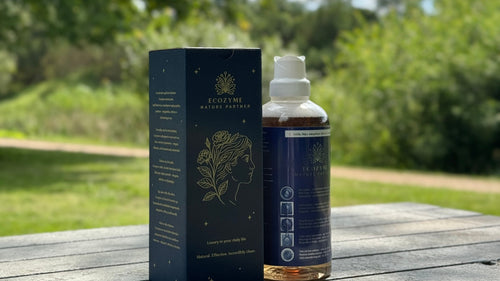
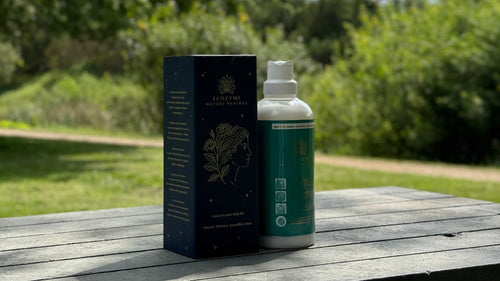
If you want one product for dark and coloured fabrics, choose a laundry detergent suited to everyday washing that you can use with the right programme and dose. For example, Ecozyme enzyme detergent works from 30 °C and suits most fabrics except wool and silk. Wash black wool jumpers or silk blouses with a product made specifically for those fabrics.
Temperature and programme by fabric
| Garment | Temperature | Programme and spin |
|---|---|---|
| Cotton T-shirts, sweatshirts | 30 °C | Colours or darks, up to 1000 rpm |
| Black jeans | 30–40 °C | Gentle or denim programme, 800 rpm |
| Synthetics, sportswear | 30 °C | Synthetics, 600–800 rpm |
| Viscose, modal | 30–40 °C | Delicates, 600 rpm |
| Wool, silk | As per label | Wool or hand-wash programme with a dedicated product |
A practical routine for washing black clothes
- Sort: wash black and dark clothes separately, without towels or fluffy fabrics that shed lint.
- Before washing, dampen deodorant and sweat areas, apply a little detergent and leave for 10–15 minutes.
- Turn clothes inside out and close zips and buttons.
- Do not fill the drum to the maximum — leave about a hand’s width of space at the top, because extra friction speeds up fading.
- Choose 30 °C or a lower temperature if the label allows.
- Do not use too much detergent, as residue shows up faster on black fabric.
- If your water is hard or you have seen streaks before, add an extra rinse.
- Take the clothes out as soon as the programme ends and give them a shake.
You can read more about the logic of low temperatures in our article Washing at low temperatures.
How much detergent should you use?
For black clothes, the dose should be accurate rather than “a bit extra just in case”. One litre of Ecozyme detergent lasts up to 33 washes, and 40 ml is enough for lightly soiled clothes. If your water is soft, 30 ml is enough. A larger dose, up to 60 ml, is only needed for heavily soiled clothes. Find out more in our guide on how to dose laundry detergent correctly.
How to dry black clothes
- Dry them out of direct sunlight — in the shade or indoors.
- Leave clothes inside out while they dry.
- Hang T-shirts on hangers and dry jumpers flat.
- Do not put them on a hot radiator; if you use a tumble dryer, choose low heat or skip it altogether.
- Iron on the reverse side so you do not get shiny patches.
White streaks after washing: what do they mean?
White streaks usually point to one of three problems: too much detergent, too much laundry in the drum or a rinse that is too short. They are not a sign that you need even more detergent. On the contrary — you often need to reduce the dose and add an extra rinse.
If white marks keep coming back, it is also worth checking the washing machine. We have a separate guide for that: Washing machine care: how to clean it at home.
What to avoid when washing black clothes
- Washing at 40–60 °C when it is not necessary.
- Detergents for whites and bleach.
- Washing black clothes together with towels or light-coloured items.
- Long, intensive programmes for everyday clothes.
- Washing after every wear — airing is often enough.
- Leaving wet clothes in the drum for hours.
How to revive faded black clothes
No detergent can bring back dye that has washed out, but a garment often looks dull because of residue or fuzz. In that case, these steps help:
- Rinse out residue. Wash the garment at 30 °C with half the usual dose and an extra rinse. Occasionally you can pour about 100 ml of white vinegar into the softener compartment — it helps rinse away limescale and detergent residue.
- Remove fuzz. A fabric shaver or lint roller restores a smooth surface, and the colour looks deeper again.
- Re-dye. If the dye really has washed out, black fabric dye is the remaining option. It works best on cotton, linen and viscose, while synthetics take dye less well. Follow the manufacturer’s instructions.
You will find more ideas in the article How to revive the colours in old clothes.
Related Ecozyme guides
- Laundry detergent for coloured clothes
- White deodorant marks on black clothes
- How to dose laundry detergent correctly
- Washing at low temperatures
Frequently asked questions
Can black clothes be washed together with navy or grey items?
Yes, dark clothes can be washed together. Just wash new black garments separately for the first two or three washes, as they may release a little dye.
Does salt or vinegar “fix” black colour?
Salt has little effect on the colour of factory-dyed clothes. Vinegar helps rinse out residue, so the garment may look darker, but it does not restore dye. Use it only occasionally.
How often should black jeans be washed?
The less often, the better: usually after several wears. Air your jeans between washes and spot-clean individual marks.
Is an enzyme detergent suitable for black clothes?
Yes. Enzymes break down sweat and grease in cool water, so you do not need high temperatures. Just note that Ecozyme detergent is not suitable for wool and silk.
Summary
Black stays black longest when clothes are washed inside out at 30–40 °C in a drum that is not overloaded, with an accurate dose of a bleach-free liquid detergent. Dry them in the shade, avoid hot water and excess product, and remember that an extra rinse often removes the grey tinge.
For black clothes, balance matters more than strength: the right laundry detergent, a low temperature and a drum that is not overfilled.