
Laundry Detergent for Homes with Pets: How to Wash Pet Beds, Blankets and Clothes

If you share your home with a dog or cat, laundry detergent is no longer just for clothes. You use it for throws, pet beds, covers, towels after walks and clothes covered in hair or smells. What matters here is not a strong fragrance, but actually removing dirt, body oils, saliva and damp smells. Below you will find out how often to wash pet textiles, how to prepare and wash a pet bed, what to do with large items and how to look after your washing machine afterwards.
Mistake number one: washing the bed only when it already smells strongly
Pet beds and blankets build up odour gradually. By the time the smell is really noticeable, they often contain not only surface dirt but also oils and moisture that have soaked in deeper. That is why it is better to have a regular routine: wash blankets more often, and bed covers according to use and the care label.
If the smell lingers even after washing, it is worth reading our guide to laundry detergent for sweat odour. The principle is similar: odours often come back because of greasy residue left in the fabric.
How often should you wash pet textiles?
The exact frequency depends on the size of your pet, its coat, the season and how much time it spends outdoors. As a guide:
| Item | How often | Temperature |
|---|---|---|
| Throw on the sofa or bed | Every 1–2 weeks | 30–40 °C |
| Pet bed cover | Every 2–4 weeks | 40 °C, up to 60 °C for cotton if the label allows |
| Whole bed (if washable) | Every 1–3 months | As per label, usually 30–40 °C |
| Towels used after walks | After 2–3 uses, straight away after a muddy walk | 40–60 °C |
| Soft toys | Every 2–4 weeks | 30–40 °C |
In autumn and spring, when there is more mud and wet weather, you will need to wash more often.
How to prepare items before washing
- First shake off the hair or use a lint roller. You can also collect hair easily by wiping the fabric with a damp rubber glove.
- If there is mud, let it dry and brush it off before washing.
- Check the care label and remove the filling or foam insert if possible.
- Close zips so they do not catch on the drum or other fabrics.
- Do not wash pet beds together with your everyday clothes.
- If the fabric allows, choose a longer cycle and a thorough rinse.
- Do not overload the drum: bulky blankets and beds need room to move.
How to wash a pet bed: step by step
- Remove hair and dry dirt with a lint roller, a vacuum cleaner or a rubber glove.
- Treat stains. Rinse saliva, vomit or urine stains with cool water first, as hot water can "bake" protein-based dirt into the fabric. Then apply a little liquid detergent and leave it for 10–15 minutes. For older stains, see our guide to removing set-in stains.
- Fill the drum only halfway. Bulky items need space to move and rinse properly.
- Choose the programme. For cotton, 40 °C (up to 60 °C if the label allows); for synthetics and fleecy blankets, 30–40 °C.
- Dose according to load and soiling. For very dirty items you can increase the dose slightly, but do not double it.
- Add an extra rinse. This helps remove both hair and product residue from the fabric.
- Dry thoroughly. Dry thick beds and foam inserts in a well-ventilated place; this can take a day or two. Filling that is not fully dry quickly starts to smell damp.
What if the bed does not fit in the washing machine?
- Remove and wash only the cover, then vacuum the inside and air it outdoors.
- You can wash a large bed in the bath in lukewarm water with a small amount of liquid detergent, then rinse it well several times with clean water.
- For very large items, a launderette with large-capacity machines is a convenient option.
Which detergent should you choose for pet textiles?
Choose a laundry detergent that works well on organic soiling and does not rely on a strong scent alone. A strong fragrance may seem pleasant to people, but it can be too intense for your pet and it does not remove the cause of the problem.
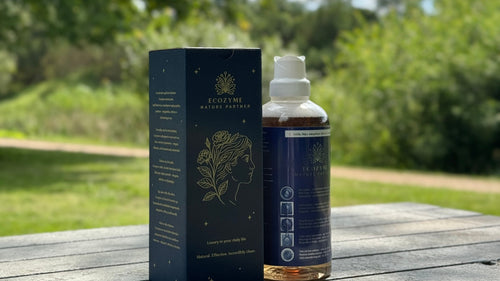
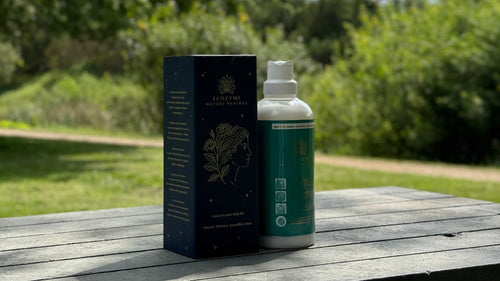
Enzyme detergents are particularly well suited to this, because enzymes help break down protein- and fat-based dirt such as saliva, mud and body oils, even at lower temperatures. Ecozyme enzyme detergent, for example, works from 30 °C and is suitable for most fabrics except wool and silk. It is fragranced, so dose it accurately for your pet's things and add an extra rinse. Wash wool blankets with a detergent made for wool.
If you wash often, a liquid product is more convenient, as it is easier to dose and can be applied directly to a stain before washing when needed.
What to do with towels and blankets after rain
Damp towels and blankets quickly start to smell if they are left rolled up. It is better to dry them or wash them the same day. For more on odour problems in textiles, read our article Laundry detergent for towels and bed linen.
If the items are large, it is better to wash fewer of them per cycle. An overloaded drum is one of the most common reasons why odours come back after washing.
Looking after the washing machine after washing pet items
After washing pet beds and blankets, hair is left in the drum, the door seal and the filter. If you do not remove it, it will end up on your next load.
- Wipe the drum and rubber door seal with a dry cloth straight after washing.
- Leave the door and drawer ajar so the machine can dry out.
- If you wash pet items regularly, clean the filter more often than usual, roughly once a month.
- Now and then, run an empty cycle to rinse out any remaining hair.
You will find a detailed cleaning plan in our article Washing machine care.
Frequently asked questions
Can I wash my pet's blankets together with my own clothes?
Better not. Hair, dirt and odour spread through the whole load. Wash your pet's things separately and wipe the drum afterwards.
What temperature is best for a dog bed?
For most bed covers, 40 °C is enough. Cotton covers can be washed at 60 °C now and then if the label allows. Wash synthetic and fleecy blankets at 30–40 °C so they keep their shape and softness.
How do I get urine smell out of a blanket?
Rinse the area with cool water as soon as possible, apply a little liquid enzyme detergent, leave it for 10–15 minutes and wash with an extra rinse. If the smell remains, repeat before drying, as heat can set the odour. Do not use ammonia-based cleaners: to your pet, their smell resembles urine.
Should I use fabric softener on pet items?
Usually there is no need. Fabric softener adds extra scent, and pets have a far stronger sense of smell than people. For beds and blankets your pet lies on, a well-rinsed detergent is enough.
How can I reduce the amount of hair in the washing machine?
Remove as much hair as possible while the items are dry before washing. If you have a tumble dryer, a short no-heat cycle before washing helps loosen hair, which then collects in the dryer's lint filter. After washing, wipe the drum and the door seal.
Summary
Wash pet textiles regularly, before a strong smell develops. Before washing, remove hair and dirt, treat stains with cool water and detergent, fill the drum only halfway, choose 30–40 °C (up to 60 °C for cotton) and add an extra rinse. After washing, dry the items thoroughly and wipe out the machine.
In a home with pets, what matters most is regular washing, a drum that is not overloaded and a well-chosen detergent for clothes and household textiles.