
How to Get Smells Out of Clothes: Sweat, Damp, Smoke and More

A shirt looks clean, but the moment you put it on you notice sweat, damp or smoke. It is one of the most common laundry problems, and a stronger fragrance or an extra dose of detergent rarely solves it. If you want to know how to get smells out of clothes, start by understanding where the smell comes from.
In this guide you will find a quick answer on how to wash odours out of clothes, a table by odour type and practical tips for sweat, damp, smoke, cooking, storage and sportswear smells.
Quick answer: 5 steps
- Air it out. Hang the garment outside or by an open window for at least a few hours. For smoke and cooking smells this is sometimes enough on its own.
- Soak it. Dissolve 2–3 tablespoons of baking soda in about 4 litres of lukewarm water and leave the garment to soak for 30–60 minutes.
- Wash at the right temperature. Follow the care label: cotton can usually go at 40–60 °C, synthetics at 30–40 °C. Do not overfill the drum.
- Add vinegar. Pour about 100 ml of white vinegar into the fabric softener compartment. It helps rinse out detergent residue and neutralise odours.
- Dry completely. Only put clothes away when they are fully dry. Slightly damp fabric soon starts to smell musty again.
Important: never mix vinegar with chlorine bleach, and do not use baking soda and vinegar in the same water – they cancel each other out.
Why clothes start to smell
Most unpleasant smells come not from the fabric itself but from what is left in it. Sweat, skin oils, deodorant residue, cooking grease and moisture create an environment where bacteria and mould thrive. It is their by-products that cause that sour or musty smell.
That is why the goal is to remove the source, not mask it. This is where an enzyme detergent helps: enzymes break down the protein and fat residues that bacteria feed on, so they wash out of the fibres more easily, even at lower temperatures. It is not magic – the garment still needs a good rinse and proper drying – but the odour simply has less to feed on.
Smell, cause and what to do
| Smell | Most common cause | What to do |
|---|---|---|
| Sweat | Protein and fat residues, bacteria, especially in synthetics | Soak in baking soda, wash inside out, use an enzyme detergent |
| Damp, musty | Clothes left too long in the machine or not fully dried | Rewash straight away with vinegar, dry completely |
| Smoke | Smoke particles settle on the fibres | Air outside, soak in baking soda, wash |
| Food, kitchen | Grease vapour gets into the fabric | Wash at the highest temperature the label allows |
| Storage, second-hand | Long storage in a closed, damp space | Air, soak, wash before wearing |
| Smell after washing | Too much product, overloaded drum, dirty machine | Reduce the dose, leave space in the drum, clean the machine |
Sweat smell in clothes
Sweat odour builds up most in the armpit area, especially in synthetic T-shirts and blouses. Polyester holds on to skin oils more stubbornly than cotton, so the smell often comes back as soon as you warm up, even though the garment has just been washed.
- Do not leave sweaty clothes in the laundry basket for days – the sooner you wash them, the easier the smell comes out.
- Before washing, soak the armpit areas in a baking soda solution for 30–60 minutes, or rub in a little liquid detergent and leave it for 10–15 minutes.
- Wash clothes inside out so water and detergent reach the inner side better.
- Skip fabric softener on synthetics – it can leave a coating that traps odours.
For more on choosing a product and washing technique, see our article on laundry detergent for sweat odour.
Clothes smell damp or musty
A stale, mildewy smell usually appears when washed clothes sit in a closed washing machine for a few hours or overnight, or when they dry too slowly in a humid room.
- Rewash them straight away with about 100 ml of white vinegar in the softener compartment.
- If the smell is strong, soak them first for 30 minutes in about 4 litres of water with 100 ml of vinegar.
- Dry them where the air moves: outside, by an open window or with the ventilation on.
If you can already see small dark spots on the fabric, it is not just a smell but mould. We explain how to deal with it in our guide on how to remove mould stains from clothes.
Smoke smell in clothes
Cigarette, bonfire and barbecue smoke leaves fine particles that settle on the surface of the fibres. Smoke odour is usually superficial, so it is easier to get rid of than old, set-in sweat.
- First, air the garment outside for a few hours or overnight. A flow of fresh air removes a large part of the smell.
- Soak heavily smoke-soaked clothes in a baking soda solution (2–3 tablespoons per 4 litres of water) for 30–60 minutes.
- Wash as usual and add about 100 ml of vinegar to the softener compartment.
For jackets, coats and other items you cannot wash, a longer airing outdoors is often enough.
Food and cooking smells
The smell of frying, a deep fryer or a grill gets into clothes together with grease vapour. Airing alone is not enough here – you need a wash that removes the grease. Wash at the highest temperature the label allows. An enzyme detergent helps lift grease residues even at lower temperatures, so it also works for fabrics that cannot be washed hot.
Second-hand clothes and storage smell
Clothes from charity or vintage shops and items that have been stored for a long time often have a distinctive “storage” smell. It comes from long periods in a closed room, moisture and sometimes the scented products used to treat the items.
- Air the clothes outside for at least a few hours before washing.
- Soak them in a baking soda solution for an hour, then wash according to the label.
- If the smell remains after the first wash, repeat the cycle with vinegar in the softener compartment.
We cover this in more detail in our article on removing storage smells from second-hand clothes.
Sportswear
Sportswear is usually made of synthetic, quick-drying fabrics. They wick moisture well but hold on to oils and odours. To keep your kit from smelling:
- take clothes out of your gym bag straight after training and hang them up to dry if you cannot wash them the same day;
- wash them inside out at 30–40 °C unless the label says otherwise;
- do not use fabric softener – it clogs the fabric and reduces its ability to wick moisture;
- every few weeks, soak your kit for 30 minutes in about 4 litres of water with 100 ml of vinegar.
Clothes smell even after washing
If the smell survives the wash, the cause is usually your laundry habits:
- Too much detergent or softener. The excess does not rinse out, stays in the fibres and becomes food for bacteria. Dose according to water hardness and how dirty the load is.
- An overloaded drum. Clothes need room to move. Leave at least a hand’s width between the laundry and the top of the drum.
- A dirty washing machine. If you always wash at low temperatures, residue and mould build up in the door seal, detergent drawer and filter. Our washing machine care guide explains how to clean it.
- Clothes not fully dry. Even slightly damp fabric starts to smell musty in the wardrobe within a few days.
- Clothes left in the machine. Take them out as soon as the programme finishes.
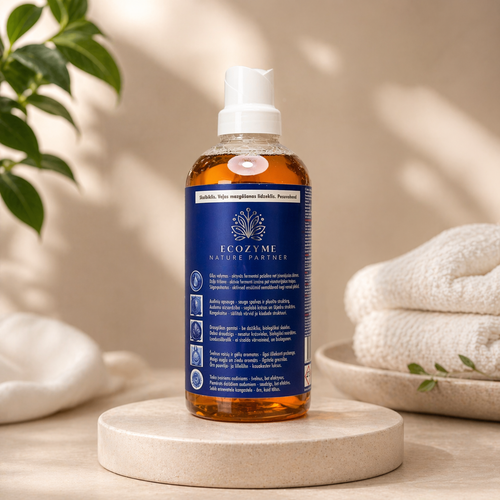
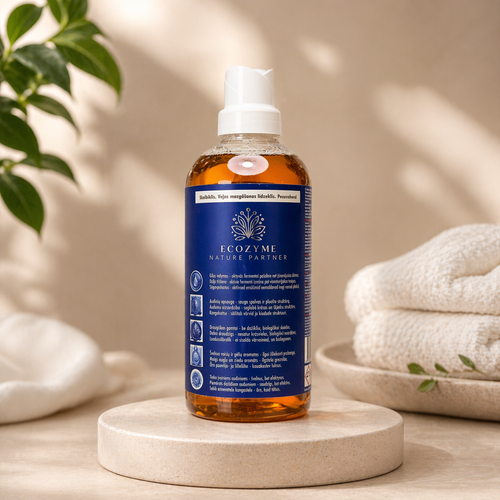
For everyday washing, a liquid enzyme detergent that works from 30 °C is a sensible choice. Ecozyme detergent, for example, is suitable for most fabrics except wool and silk, and 1 litre is enough for up to 33 washes. It has a light apple and floral fragrance, but its job is to wash out the source of the smell, not to cover it up.
Frequently asked questions
Will vinegar damage my clothes or washing machine?
About 100 ml of white vinegar in the softener compartment is a safe amount for most laundry and machines, especially if you do not use it every wash. The vinegar smell disappears once the clothes are dry. Never use it together with chlorine bleach.
Why does the smell come back when I warm up?
It is a sign that sweat and oil residues are still in the fibres. Heat and moisture “wake them up” again. A baking soda soak before washing, a moderate detergent dose, a good rinse and an enzyme detergent all help.
How can I get rid of a smell quickly without washing?
Air the garment outside, ideally on a breezy day. Steaming also helps with smoke and cooking smells. For sweat and damp, however, airing is usually not enough – the garment needs washing.
What about wool and silk?
Wool and silk garments often only need airing. If they do need washing, use a product made for them and a gentle programme. Ecozyme detergent is not suitable for these fabrics.
Summary
Getting smells out of clothes is easiest when you know the cause. Smoke and cooking smells often go with airing and a normal wash, sweat and sportswear respond to soaking and an enzyme detergent, and a damp smell needs a quick rewash with vinegar and thorough drying. If clothes smell even after washing, cut back the dose, do not overload the drum and clean your washing machine regularly.