
Laundry Detergent in Hard Water: Why Laundry Feels Rough and What to Do

Even a good detergent can perform worse in hard water if you use the same dose and programme as you would in soft water. Hard water contains more minerals, which can bind with laundry products, leave deposits and make fabrics feel rougher. So if your washing comes out stiff, turns grey or loses its softness, the detergent is not necessarily the only culprit. In this article we explain how hard water affects washing, how to recognise it and what exactly to change so that towels and clothes feel soft again.
Why does hard water make washing harder?
Water hardness comes from dissolved calcium and magnesium salts. The more of them there are, the more of your detergent is used up binding minerals instead of removing dirt. The remaining mineral particles settle on the fibres together with detergent residue. The loops in towels stick together, the fabric absorbs moisture less well and becomes stiff.
Hardness is often measured in German degrees (°dH). Roughly speaking, water up to 7 °dH is considered soft, 8–14 °dH medium-hard and 15 °dH or more hard. The higher the temperature, the faster limescale forms, which is why hot programmes in hard water often give a rougher result rather than a better one.
How can you tell that your water may be affecting your laundry?
- Towels feel rough after washing.
- Pale streaks are left on dark clothes.
- You can see limescale or deposits in the washing machine.
- You need more and more product for the same result.
- White fabrics turn grey faster.
Pale streaks on dark fabrics are not always limescale; they can also be detergent that has not rinsed out. You can find out how to tell the difference in our article on detergent residue on clothes. If the machine also starts to smell unpleasant, it is worth giving it a proper clean first, following this guide: how to clean your washing machine at home.
How do you find out how hard your water is?
- On your water supplier's website. Most suppliers publish water hardness by town or postcode area.
- With test strips. Dip a strip into the water briefly and read the hardness from the colour.
- From everyday signs. If your kettle scales up quickly and white deposits build up on taps and the shower screen, your water is most likely hard.
If you use water from a private well, its hardness can differ considerably from mains water, so it is worth testing it separately.
Do you need more detergent in hard water?
Sometimes, yes, but that does not mean doubling the dose every time. It is best to start from the manufacturer's recommendation and increase it only when the laundry is genuinely very dirty, the drum is full or you notice that the usual dose is not working. Too much detergent can have the opposite effect: the product does not rinse out and leaves fabrics feeling rougher.
A practical guideline with Ecozyme detergent: in medium-hard and hard water, lightly soiled laundry needs 40 ml, moderately soiled 50 ml and heavily soiled 60 ml. In soft water, 10 ml less is enough. A larger dose rarely improves the result.
Before you change your dose, read our guide to dosing laundry detergent. It helps you work out when there is too little detergent and when the real issue is the programme, the water or an overloaded drum.
How to wash in hard water: step by step
- Do not overload the machine. The fabric needs to move and the water needs to circulate freely. Leave a gap of about a hand's width between the laundry and the top of the drum.
- Dose according to load and hardness. Use the measuring cap rather than pouring by eye.
- Choose 30–40 °C. This is enough for most everyday laundry, and less limescale forms than on 60–90 °C programmes.
- Add an extra rinse for towels, bedding and dark clothes that come out streaky.
- Take the laundry out straight after the cycle and give it a few firm shakes so the matted loops separate.
- Dry it somewhere well ventilated. Do not dry towels on a hot radiator, as they dry stiff. If the care label allows, a tumble dryer on a gentle setting will soften towels.
- Clean the machine regularly. Deposits in the drum and drawer can end up back on your fabrics, so clean the drawer once a month and run an empty cleaning cycle.
Symptoms and solutions
| What you notice | Likely cause | What to do |
|---|---|---|
| Rough towels | Limescale and detergent residue in the loops | Extra rinse, accurate dosing, no drying on the radiator |
| Whites turning grey | Too little detergent for hard water or an overloaded drum | Increase the dose by 10–20 %, wash smaller loads |
| Pale streaks on dark clothes | Detergent not rinsed out, or limescale | Do not overdose, add an extra rinse, clean the machine |
| Lots of foam but a poor result | Dose too high | Go back to the recommended dose |
How to revive towels that have already gone rough
If your towels are already stiff, one normal wash will not fix the problem. Try this: wash them separately with half the usual amount of detergent and pour about 100 ml of white vinegar into the fabric softener compartment. Vinegar helps dissolve mineral deposits. Then run an extra rinse. Do this only now and then, not with every wash, and never mix vinegar with products that contain chlorine bleach.
If your towels are not only rough but also start to smell unpleasant quickly, you will find useful tips in our article Laundry detergent for towels and bed linen.
Will fabric softener help?
A fabric softener can make fabrics feel nicer, but it is not a solution to every problem. Softener does not dissolve limescale; it simply coats the fibres with a thin film. Use it sparingly on towels, as they may become less absorbent; it works better for bedding and everyday cotton clothing. Read more in our article Fabric softener: do you really need it?
Which detergent should you choose?
In hard water, a liquid laundry detergent that disperses easily is a convenient choice, especially if you wash at 30–40 °C. What matters is not using the product in excessive amounts and making sure the laundry is rinsed well.
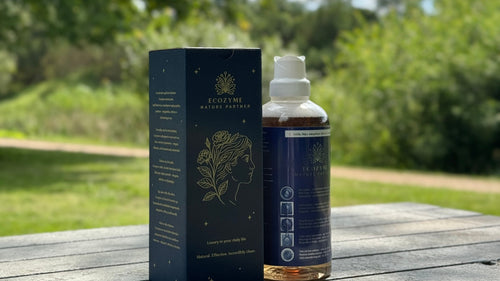
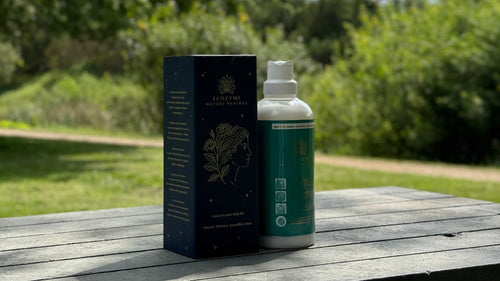
For example, Ecozyme enzyme detergent works from as low as 30 °C, so there is no need to choose hot programmes that encourage limescale in hard water. It is suitable for most fabrics except wool and silk.
Common mistakes
- Doubling the dose every time "just in case".
- Trying to fix roughness with ever larger amounts of fabric softener.
- Washing everything at 60 °C or higher when there is no need.
- Cramming the drum full of towels or bedding.
- Forgetting to clean the detergent drawer, where deposits build up.
If your laundry still feels rough, check three things: water hardness, how clean the machine is and whether you are overloading the drum. Results often improve not by changing the product but by sorting out the whole washing routine.
Frequently asked questions
Does hard water damage the washing machine?
Over time, yes. Limescale builds up on the heating element, in the drum and in the hoses, so the machine heats water more slowly and uses more electricity. Regular cleaning and lower-temperature programmes slow this process down.
Do washing soda or a water softener help?
In very hard water (above 21 °dH), a water-softening product or a spoonful of washing soda in the main wash compartment can improve results. Do not use washing soda on wool or silk. In medium-hard water, accurate dosing and an extra rinse are usually enough.
Why are my towels rough even though I use fabric softener?
Most often because of too much detergent or softener, an overloaded drum or drying on a radiator. Softener does not remove limescale, so sort out the dose, rinsing and drying first.
Is it better to wash hotter in hard water?
Not necessarily. Limescale forms faster in hot water. For everyday laundry 30–40 °C is enough; choose 60 °C only when you need it for hygiene, for example for kitchen towels, and when the care label allows it.
Summary
Hard water gets in the way of good washing because of minerals that bind part of the detergent and settle on the fibres. Do not increase the dose blindly: start from the recommendation, add 10–20 % in hard water, do not overload the drum, wash at 30–40 °C, add an extra rinse and clean the machine regularly.
In hard water, the result depends on the whole system: the right detergent, the right dose, good rinsing and a clean washing machine.